

Opens the download page on distrib.wiki.
English edition published on .
History
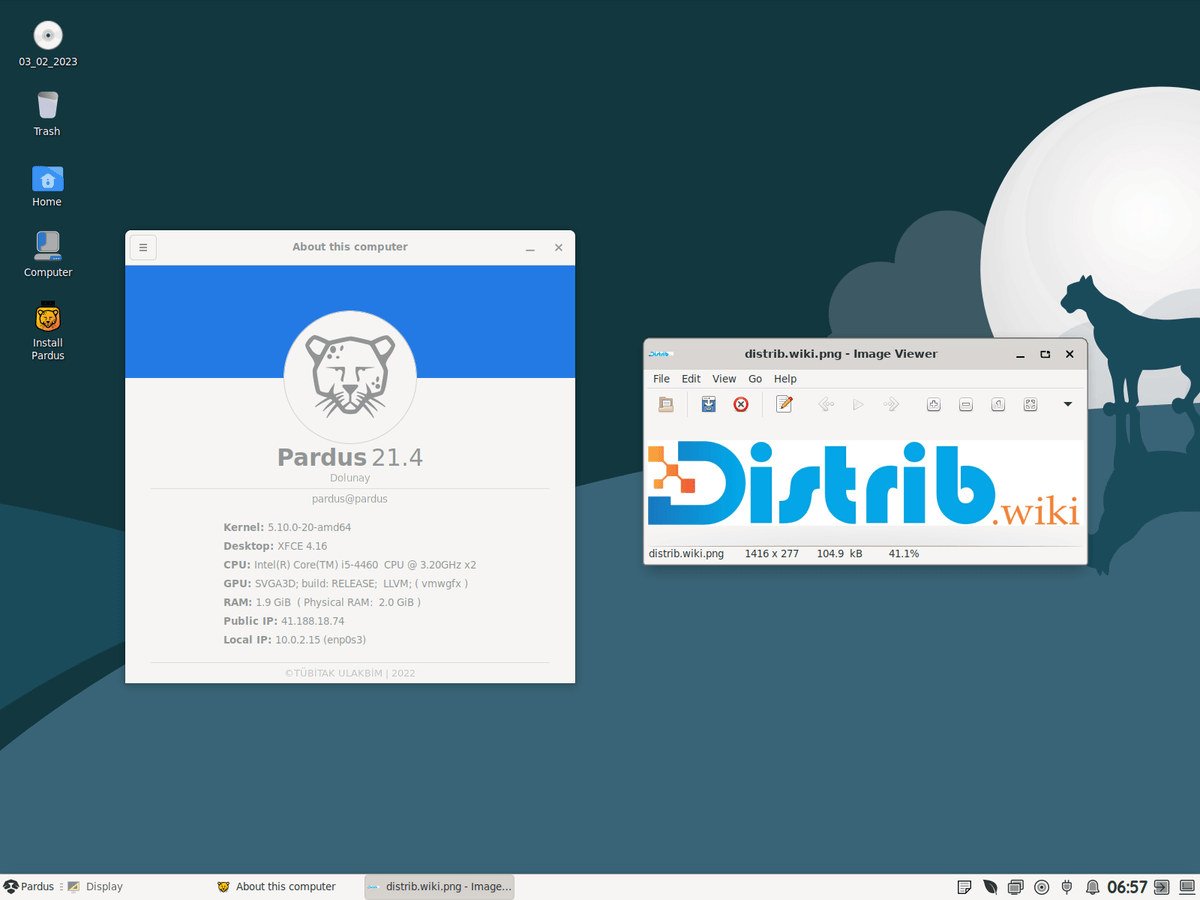
Pardus is a Turkish Linux distribution now based on Debian. The project began within TÜBİTAK in 2003 and adopted Debian as its base in 2013. That year marked a change in its technical foundation, not the end of development. The project's official history describes its continuing releases and its transfer to TÜBİTAK BİLGEM's Software Technologies Research Institute (YTE) in October 2024. See the official Pardus history.
Strengths
Pardus aims to provide a practical desktop for personal and institutional use. Its Debian foundation, graphical tools and selection of preinstalled applications can help with installation, administration and everyday work. For someone who prefers a ready-made desktop, these tools may reduce the amount of initial setup. Security still depends on supported software, timely updates and appropriate configuration; no operating system is immune to malware.
Points to consider
Before choosing Pardus, check the availability of documentation and assistance in your preferred language, as well as support for the applications and hardware you need. Its community and institutional focus differ from those of larger international desktop distributions. The official project description confirms that development and maintenance continue under TÜBİTAK BİLGEM YTE. Check the support policy for the specific version you plan to install, rather than assuming every older image remains maintained.
Choosing Pardus
Pardus combines a Debian base with desktop applications and graphical administration tools. It may suit newcomers or experienced users whose needs match its software, language resources and institutional ecosystem. Evaluate a current supported release on your own hardware, make a backup before installation and confirm the availability of essential applications before replacing an existing system.